


Car AI safety is straight-up blowing my mind these days, like, I’m sitting here in my boring old sedan in traffic outside Chicago—yeah, it’s January 2026 and still freezing my butt off—and I can’t stop thinking about how this tech is changing everything.
I gotta be real with you: I was super skeptical at first. Seriously, handing over the wheel to some computer? Sounds like a recipe for disaster. But then I started digging into the latest stuff, and honestly, it’s kinda terrifying how much better car AI safety is getting at keeping us alive compared to us flawed humans. Like, Waymo just dropped data showing their driverless cars have 90% fewer serious injury crashes than regular drivers. That’s wild.
Why Car AI Safety Feels Like a Game-Changer to Me
Look, I’ve had my share of close calls. There was this one time last summer, rushing home on the interstate, coffee spilling everywhere, and I totally spaced on a lane merge—nearly sideswiped a truck. Heart-pounding stuff. Now imagine if car AI safety features kicked in and just… handled it. That’s what ADAS is doing these days with automatic emergency braking and lane-keeping. Reports say it’s cutting rear-end collisions by up to 40%.
And performance? Oh man, automotive AI performance isn’t just about going faster—it’s smarter power management in EVs, predictive stuff that squeezes out more range. I test-drove a buddy’s Tesla recently, and the way it optimizes everything felt eerie, like the car knew me better than I know myself.
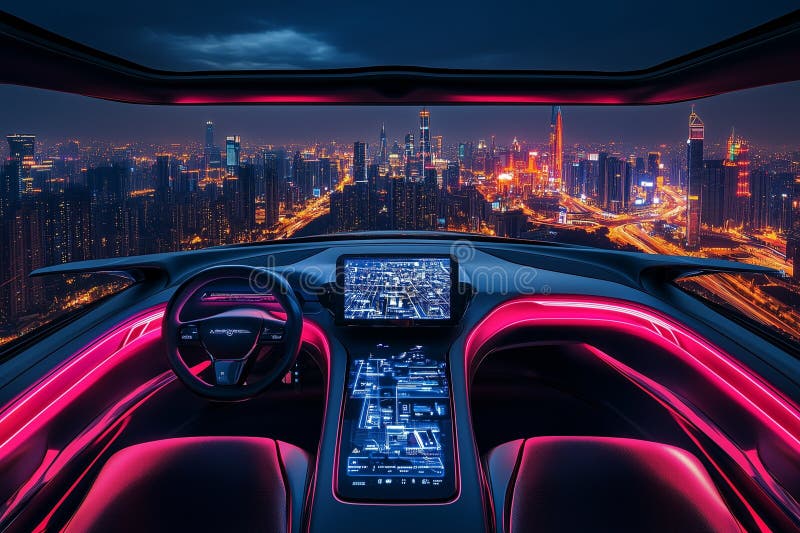

Here’s that neon-drenched dashboard vibe I’m obsessed with—makes my current car feel like a dinosaur.
My Take on How Car AI Safety Handles the Scary Stuff
Okay, raw honesty: I still get anxious thinking about full autonomy. What if it glitches? But the numbers don’t lie. Swiss Re studied Waymo over millions of miles and found 92% fewer bodily injury claims than human drivers, even compared to new cars with fancy ADAS. And Tesla’s FSD v14 updates? They’re rolling out better pedestrian detection and smoother maneuvers—though I’ve seen videos where it hesitates weirdly, which freaks me out.
I messed up big time once: drowsy driving after a late shift, nodded off for a second. Thank god nothing happened, but now in-cabin AI that watches for fatigue? That could’ve saved my dumb ass. McKinsey says edge AI is making these systems react in milliseconds.
- Predictive maintenance: Catches issues before they blow up—saves money and prevents breakdowns on the highway.
- Driver monitoring: Spots if I’m distracted (guilty) or impaired.
- Pedestrian detection: Waymo’s down 92% on those crashes. Huge for cities.
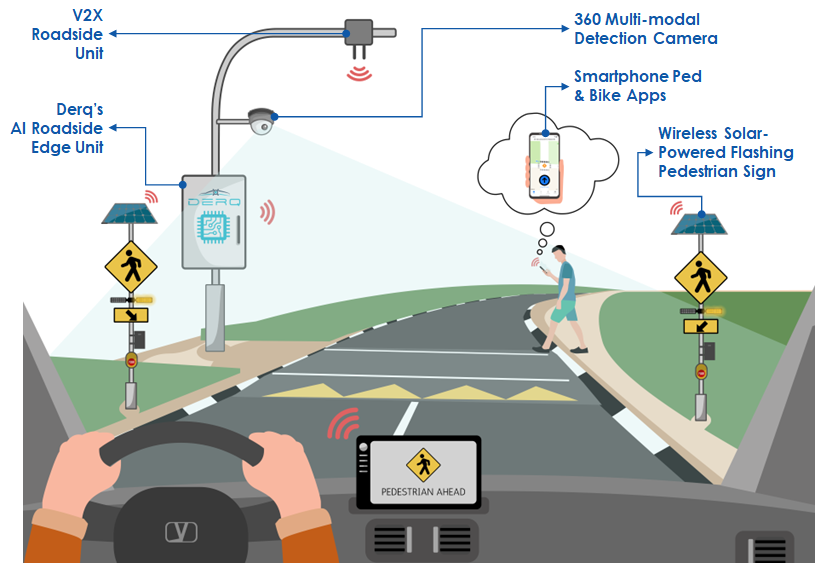
Derq Demonstrates Industry-Leading AI Solution to Tackle Spike in …
This kinda shot of AI sensors lighting up to spot people—personal nightmare fuel turned safety net.
The Performance Side of Automotive AI That’s Got Me Hyped (and Conflicted)
Car AI isn’t just safety; it’s boosting how cars feel. Like, AI optimizing aerodynamics or battery use in real-time. NVIDIA’s stuff is pushing reasoning models that think through rare scenarios. But I digress—my old car chugs gas like crazy, and I’m jealous of how efficient these AI-tuned EVs are.
GM’s announcing eyes-off driving soon, and XPENG’s going Level 4. It’s coming fast, y’all.
Wrapping This Ramble: Is Car AI Safety Worth the Hype?
Anyway, yeah, car AI safety and performance are revolutionizing everything, but I’m still that flawed American driver who loves the wheel sometimes. It’s cautiously exciting—saves lives, makes driving less stressful, but man, losing control feels weird.
If you’re on the fence like me, check out Waymo’s safety page for the hard datawaymo.com or Tesla’s FSD detailstesla.com. Seriously, try a demo ride if you can. What’s your take—ready to let the AI drive, or holding on tight? Drop a comment, let’s chat. Drive safe out there.

